


Table of Contents
- 1. Objective of the proposal
- 2. FCC proposal for call centers in the U.S.
- 3. Impact of outsourcing on customer service
- 4. Improvements in customer service competition
- 5. Measures against illegal robocalls
- 6. Disclosure and options for consumers
- 7. Concerns about privacy and national security
- 8. Final Reflections on the Transformation of Customer Service in Telecommunications
- 9. Transform your customer experience with Suricata Cx
Objective of the proposal
- The FCC will vote on a proposal to improve customer service and strengthen accountability for certain companies in the U.S.
- The plan seeks to encourage “onshoring” (bringing call center jobs back to the U.S.) and raise standards at centers that continue operating abroad.
- It includes disclosure when a call is routed outside the country and the option to switch to a U.S.-based representative.
- It also aims to curb illegal robocalls originating abroad, exploring targeted fees or bonds.
FCC proposal on call centers
– What changes: disclosure/transfer requirements, service standards (including proficiency in “Standard American English”), and economic measures to discourage robocalls are being discussed.
– Who it affects: U.S. companies that route service to offshore centers, call center providers/operators, and consumers who call U.S. businesses.
– What stage it’s in: it is a proposal that the FCC will bring to a vote and that is being channeled through a notice of proposed rulemaking (NPRM) to receive comments.
– What it means for the reader: several ideas may still be adjusted; the most useful thing is to understand what is being proposed and what could become enforceable if adopted.
FCC proposal for call centers in the U.S.
The Federal Communications Commission (FCC) announced that it will put to a vote a proposal aimed at improving customer service in call centers, with a dual emphasis: encouraging companies to repatriate operations (onshoring) and, at the same time, raising requirements and accountability when service is provided from abroad.
In the current state described, the package is presented as a regulatory initiative under discussion (with a vote and a request for comments), so the specific changes will depend on the process and what is ultimately adopted.
The FCC chairman, Brendan Carr, framed the initiative around an everyday frustration: consumers who call a U.S. company and end up being served by a center located outside the country. According to Carr, that experience is often complicated by cultural and language barriers, which translates into more time to resolve problems and, in many cases, a feeling of a “dead end” for the user.
The proposal is structured as a notice of proposed rulemaking (notice of proposed rulemaking) to gather public comments on three fronts: how to encourage and facilitate onshoring, what steps the FCC can take to improve service and security of communications between an American and a call center that remains in
the exterior, and how to address scams and illegal robocalls that originate in foreign call centers.
The package also includes a concrete idea to raise the standard of service: requiring that those who answer calls be proficient in “Standard American English”.
In summary, the announcement groups measures and lines of work around:
– Disclosure when a call is routed abroad.
– Option to switch to a U.S.-based representative.
– Stronger safeguards for personal data.
– Service standards (including proficiency in “Standard American English”).
– Inquiry into economic tools (fees or bonds) to discourage illegal robocalls originating abroad. The FCC also proposes strengthening the accountability of certain companies in the U.S., in an attempt to align incentives: if a company decides to operate with offshore centers, the regulator seeks to ensure that decision does not dilute obligations to the consumer.
FCC Rulemaking Process
1) Proposal and vote at the FCC: the “item” is introduced and the Commission decides whether it moves forward.
2) NPRM (notice of proposed rulemaking): the draft is published and a window opens for public/industry comments.
3) Comments and replies: companies, consumers, and organizations provide cases, costs, risks, and alternatives.
4) Review and adoption (or adjustments): the FCC may modify the text and vote on a final rule, or leave parts as guidelines/inquiry.
Practical checkpoint: until there is final adoption and an effective date, many measures remain “proposed” (not mandatory).
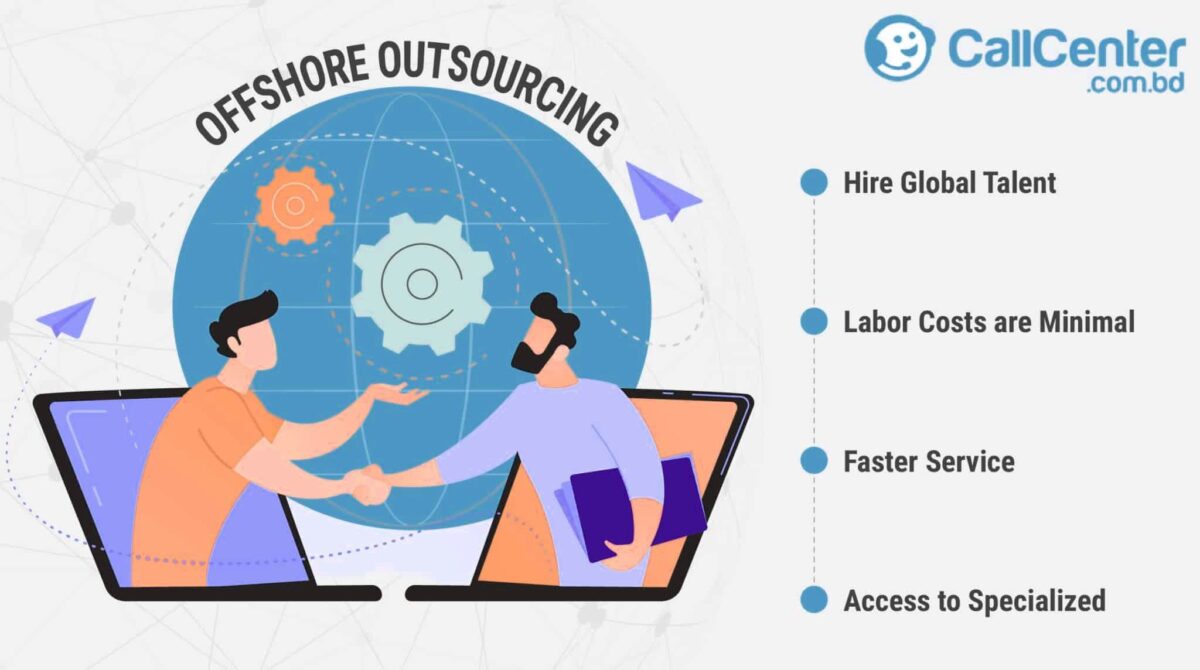
Impact of outsourcing on customer service
The FCC starts from a broad diagnosis of outsourcing. According to figures cited by the agency itself, nearly 70% of U.S. companies outsource at least one department, including customer service and call center operations, to locations abroad. That shift, accelerated over the past decades, not only reshaped employment: it also altered the support experience for millions of users.
Carr argues that the result, “all too often,” is a consumer who cannot get their problem resolved due to language and cultural barriers. In practice, those barriers can show up as misunderstandings, repeated explanations, difficulty following instructions, or difficulty describing technical and billing issues. The regulator does not present satisfaction metrics in this announcement, but it does put the focus on friction: the call becomes a longer and more uncertain process.
The commission also
links outsourcing to a territorial effect: the practice “takes jobs away” from communities within the U.S. and, at the same time, creates service problems. In that reading, onshoring is not just a labor policy; it is a lever to improve quality of service by reducing the cultural and linguistic distance between company and customer.
Another element of the impact is diffuse accountability. When service is provided from abroad, the consumer may perceive that “no one takes responsibility” if the interaction fails. The FCC’s proposal tries to address that feeling by strengthening disclosure obligations and escalation options to U.S.-based representatives, so that the user does not get trapped in a dead-end offshore loop.
Outsourcing and risks in customer service
– Data cited by the FCC: “Today, nearly 70% of U.S. businesses outsource at least one department, including customer service and call center operations, to locations abroad.” (Brendan Carr, FCC Chairman).
– Operational observation underpinning the approach: Carr attributes part of the friction to “cultural and language barriers,” linking them to difficulties in resolving incidents.
– Associated risk the proposal seeks to cover: “Overseas customer service centers also raise concerns about protecting consumers’ personal information.” (Carr), which connects customer service with data controls.
Reading note: the ~70% is presented as a figure cited by the FCC in the announcement; it is not accompanied here by the measurement methodology.
Improvements in customer service competition
Although the announcement focuses on call centers, the backdrop is competitive: the FCC seeks to “make life less frustrating” for consumers, and that includes pushing for customer service to be a real differentiator, not a cost to be minimized. In Carr’s approach, improving service is not just a matter of courtesy; it is a combination of standards, transparency, and consequences.
The proposal suggests that, if onshoring is incentivized and requirements for offshore centers are raised, companies could compete more on resolution quality and less on cost arbitrage. In that framework, the requirement of proficiency in “Standard American English” functions as a minimum threshold to reduce friction in communication, especially in complex interactions.
The FCC also proposes exploring “ways to improve service” in existing centers, which points to a logic of incremental improvement: not all operations will return immediately to the U.S., but they could operate under stricter rules. In terms of competition, that can translate into a market where the consumer has more tools to demand effective service, and where the
companies internalize the reputational and regulatory cost of poor support.
The announcement is part of a broader Carr agenda around the consumer experience. The previous month, the FCC said it would seek public comment on the shift of live sports from broadcast channels to streaming services, a change Carr described as frustrating for users accustomed to finding games on over-the-air TV or within their package. The common thread is similar: less friction, more predictability for the consumer.
Levers to raise service
How the proposal pushes competition on service (in 3 levers):
– Minimum standards: service requirements (e.g., language proficiency) to reduce “basic” communication failures.
– Transparency and choice: disclosure of offshore routing + option to transfer to a U.S.-based agent so the consumer can “vote with their decisions.”
– Consequences and incentives: more accountability for U.S. companies when they use offshore centers, so cost savings do not translate into less responsibility.
Quick read: if a company maintains high quality, transparency doesn’t punish it; if quality drops, consumer choice and accountability increase pressure to improve.
Measures against illegal robocalls
The second major pillar of the proposal is the fight against illegal robocalls that originate abroad. The FCC plans to seek comment on the “targeted” use of tariffs or bonds as tools to discourage these practices. No amounts or operational mechanisms are detailed in the announcement, but the intent is clear: raise the cost of running fraudulent calling schemes from outside the U.S.
Carr links the robocalls problem to the human and operational infrastructure of certain offshore centers. According to his framing, some foreign centers have contributed to the “rampant flow” of scam calls, even training staff who then use those skills to defraud consumers. In other words, the call center would not be only a channel for legitimate support: in certain cases, it would be a breeding ground for capabilities for phone fraud.
The FCC’s proposal, as described, seeks to tackle the phenomenon from two angles: on the one hand, data protection in legitimate interactions; on the other, discouraging the origin of illegal calls with economic instruments (tariffs or bonds) that could be applied in a targeted manner.
It also aims to gather comments on how to address scams that “originate within foreign call centers.” That wording suggests that the regulator does not
it is not limited to chasing numbers or automated campaigns, but rather looks at the operating ecosystem that allows those calls to scale and be sustained.
| Tool (under consideration) | How it discourages (general idea) | Potential advantages | Risks / trade-offs to watch |
|---|---|---|---|
| Targeted tariffs | Increase the economic cost associated with traffic/operations linked to robocalls from abroad | Can scale by volume; strong signal that “this gets expensive” | Risk of collateral impacts if the scope is not well defined; complexity in delineating which traffic/actor is subject |
| Targeted bonds | Require a financial guarantee that is forfeited or called if there are violations/abuse | Preventive incentive (comply so as not to lose the bond); can filter high-risk actors | May raise barriers for legitimate operators if the design is rigid; requires clear criteria for enforcement and due process |
Disclosure and options for consumers
One of the most concrete pieces of the package is disclosure: the proposal would “require” informing the consumer when a call is routed to a center abroad. In parallel, it proposes giving the user the option to switch to a U.S.-based representative. This point is central because it turns a technical reality—where the call is handled—into information relevant to the consumer’s decision-making.
The logic is transparency and control. If the user knows they are speaking with an offshore center, they can adjust expectations or request an alternative channel. And if there is also the option to transfer to an agent in the U.S., the experience stops being a “fait accompli” and becomes a choice. For Carr, this would also work as an incentive: if many consumers opt for domestic support, companies might reevaluate their outsourcing strategy.
The announcement adds a third element: stronger safeguards for personal data. Although no specific technical measures are detailed, the stated intent is to raise the protection standard when the interaction crosses borders. In the FCC chair’s framing, privacy is not a side issue: it is part of the hidden cost of subcontracting.
Taken together, disclosure, the option to transfer, and data safeguards aim at the same goal: reducing the information asymmetry between company and consumer. If the
the user does not know where their interlocutor is or what controls apply, their ability to demand quality and security is limited.
Transparency and control in calls
What should be clear to the consumer (if the proposal is adopted as described):
– Before or at the start of the interaction: confirmation of whether the call was routed to a center outside the U.S.
– During the call: an explicit option to request a transfer to a U.S.-based representative.
– If there is a transfer: an expectation of continuity (that the new agent receives the context so as not to “start from scratch”).
– Personal data: an indication that enhanced safeguards exist when account/identity data are shared (although the announcement does not detail the “how”).
– Useful control point: if the call stalls, asking for escalation and confirming the channel (U.S. vs offshore) helps diagnose whether the problem is process, language, or permissions.
Concerns about privacy and national security
The FCC frames outsourcing not only as a service issue, but as a potential risk to privacy, data protection, and even national security.
In the cited approach, the emphasis is on concerns and on the need for controls and accountability when customer service and the handling of personal information cross borders. Carr argues that overseas call centers “raise concerns” about how consumers’ personal information is safeguarded, especially when the interaction includes sensitive data associated with accounts, billing, or identity verification.
The argument rests on two ideas: first, that the flow of personal information may be exposed to practices and regulatory environments different from those in the U.S.; second, that some offshore centers have been linked—according to Carr—to the proliferation of phone scams. In that context, the boundary between legitimate support and abuse can become porous if robust controls do not exist.
The mention of national security raises the tone of the debate. No specific scenarios are detailed, but the message is that excessive reliance on human infrastructure outside the country can become a vulnerability: not only because of data leaks, but because of the possibility that fraud networks benefit from operational knowledge and interaction scripts learned in call-center environments.
The proposal, therefore, tries to balance two realities: that many companies already operate with offshore centers, and that the regulator wants to improve the security of communications when those operations continue. The notice of proposed rulemaking seeks comments precisely on what
steps the FCC can take to raise that standard without assuming that every operation will immediately return to U.S. territory.
Key Trade-offs of the Proposal
Tensions the proposal tries to balance (and why they matter):
– Better service vs. operating cost: onshoring and higher standards can improve resolution, but they can also change cost structures.
– Transparency vs. friction: disclosing routing and offering transfer gives the user control, but it can add steps if not designed well (e.g., separate queues or transfers without context).
– Data protection vs. distributed operations: strengthening safeguards helps reduce risk, but it requires disciplined access, verification, and information handling across remote teams.
– Security vs. generalizations: linking offshore with risk can drive useful controls, but it requires precision so as not to penalize legitimate operations that do comply.
Final Reflections on the Transformation of Customer Service in Telecommunications
The Importance of Customer Experience in the Telecom Sector
The FCC’s move puts customer service at the center of the regulatory conversation. In telecommunications—where incidents can be technical, recurring, and urgent—the customer experience is often defined by the ability to resolve issues quickly, clearly, and without friction. When the regulator talks about consumer frustration, it is describing a real cost: wasted time, repeated procedures, and, in the worst case, problems left unresolved.
Challenges and Opportunities in Implementing AI Solutions
The announcement does not focus on artificial intelligence, but the current customer service context makes the discussion about automation inevitable. The challenge is that any solution—human, automated, or hybrid—must uphold standards of understanding, traceability, and security. The opportunity, if implemented with controls, is to reduce friction and improve consistency; the risk, if implemented poorly, is to amplify the frustration the FCC says it wants to correct.
The Future of Customer Service: Toward an Omnichannel Model
The pressure to improve support is not limited to the phone. Consumers expect continuity across channels and coherent responses, without having to “start from scratch” each time. In that sense, discussions about offshore call centers and robocalls also push companies to rethink how they design support: less reliance on a single channel, more options, and more control for the user.
If the FCC moves forward with strengthened safeguards, companies will have to adapt processes, scripts, training, and data controls. In addition, the robocalls component—with the exploration of targeted fees or bonds—suggests an environment where the cost of ignoring the problem may increase.
Conclusions on Efficiency and Sustainability in the Sector
The underlying message is that efficiency based solely on cost reduction can become unsustainable if it degrades service, exposes data, or enables scams. The FCC’s proposal seeks to rebalance the system: more transparency, more options for consumers, and more pressure for companies to take responsibility for the experience they deliver, regardless of where the agent providing support is located.
Transform your customer experience with Suricata Cx
The definitive solution for ISPs and telecommunications operators
Suricata Cx is an AI-powered omnichannel customer experience platform designed specifically for ISPs and telecommunications operators in the Americas and Spain. It integrates automation, operational workflows, and escalation to human agents to handle support, sales, and service with traceability.
Leverage artificial intelligence to optimize your operations
The approach combines conversational AI with automation and “human-in-the-loop” models, so repetitive matters are resolved quickly and complex issues are routed to an agent with context. This helps reduce response and resolution times, and enables operations with a unified view across channels such as WhatsApp, webchat, social media, and IVR/voice.
A customer-centric approach that reduces costs and improves satisfaction
In telecom, satisfaction often depends on resolving issues on the first contact, avoiding repeat contacts, and maintaining continuity across channels. A hybrid model—automation where it’s predictable, human intervention where judgment matters—makes it possible to scale without sacrificing control, with operational integrations and metrics to manage service quality.
From Suricata Cx’s perspective, when the regulatory debate focuses on transparency, consumer choice, and data protection, execution tends to depend less on the “channel” and more on the operation: conversation traceability, clear bot↔human escalation, and workflows integrated with billing/ERP systems to resolve issues without friction.
Omnichannel Implementation with Traceability
How we typically implement an omnichannel operation with traceability (example workflow):
1) Discovery (CX + Operations): map contact reasons, leakage points (recontacts), and escalation rules.
2) Flow design (CX + Product): define what automation resolves and what goes to a human, with clear criteria (complexity, risk, identity).
3) Integrations (IT/Operations): connect CRM/ticketing and, when applicable, billing/ERP so the agent (or bot) has context.
4) Quality controls (CX): conversation guides, case auditing, and transfer review to avoid “loss of context”.
5) Metrics and continuous improvement (CX + Operations): track first-contact resolution, response times, and causes of escalation.
Practical checkpoint: if transfer volume goes up or first-contact resolution goes down, it usually indicates that the bot→human “threshold” is miscalibrated or that integration context is missing.
This text is based on publicly available information at the time of writing and summarizes a regulatory proposal still under discussion. Its details (scope, definitions, timelines, and mechanisms) may change as the process moves forward. If your operation depends on offshore call centers or on anti-robocall controls, it is advisable to follow the FCC’s official updates.

Martin Weidemann is a specialist in digital transformation, telecommunications, and customer experience, with more than 20 years leading technology projects in fintech, ISPs, and digital services across Latin America and the U.S. He has been a founder and advisor to startups, works actively with internet operators and technology companies, and writes from practical experience, not theory. At Suricata he shares clear analysis, real cases, and field learnings on how to scale operations, improve support, and make better technology decisions.