


Table of Contents
- 1. TL;DR: Summary of the Raleigh One e-bike review
- 2. Introduction to the Raleigh One e-bike
- 3. Key features of the Raleigh One
- 4. Comparison with competitors
- 5. Pros and cons of the Raleigh One
- 6. Conclusions and future outlook
TL;DR: Summary of the Raleigh One e-bike review
- Urban e-bike with minimalist design and advanced technology.
- 250W motor and removable 360Wh battery with a range of up to 80 km.
- Connected security system with subscription options.
- Good performance on flat terrain, but limited on inclines.
- Price of £2,399 / €2,699, competitive in the European market.
Introduction to the Raleigh One e-bike
The Raleigh One e-bike represents a new approach to urban mobility, combining sleek design with modern technology. Developed by VanMoof founders Ties and Taco Carlier, this bike aims to offer a simplified and efficient riding experience for daily city commuting. With a legacy dating back to 1887, Raleigh is reinventing itself in an increasingly competitive market.
Key features of the Raleigh One
Design and construction
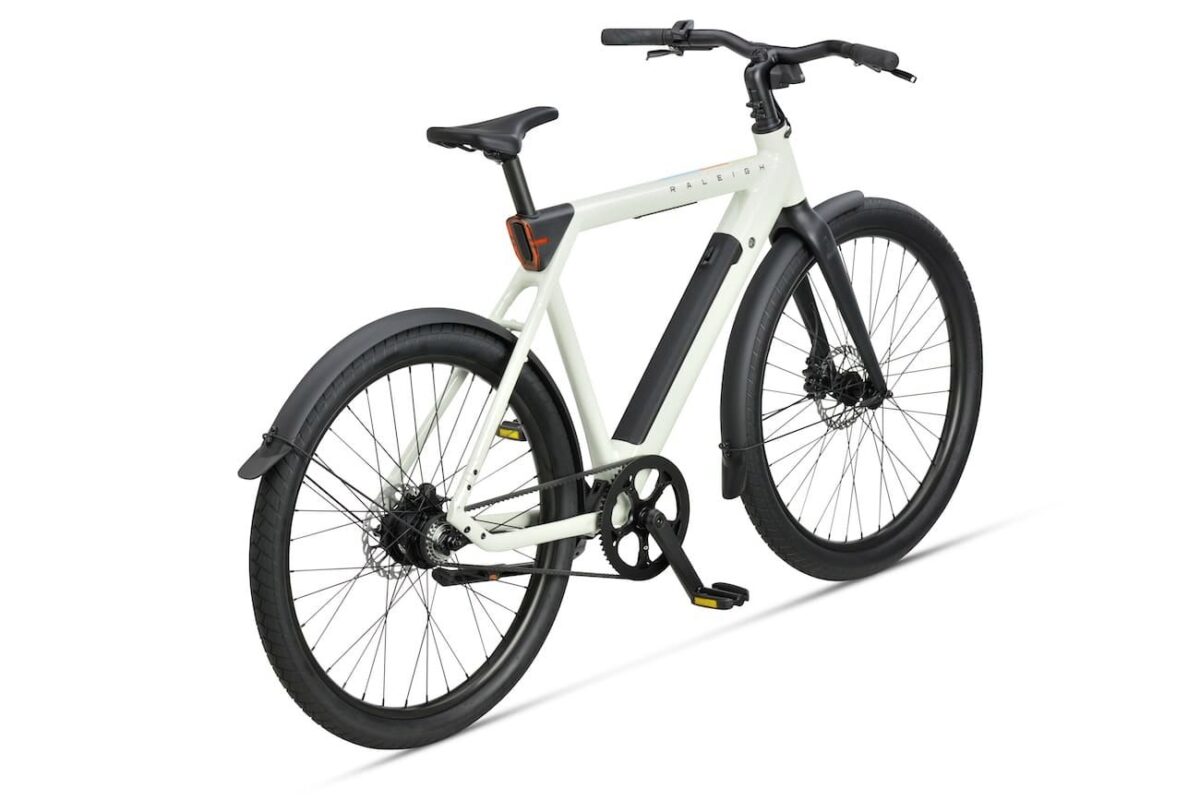
The Raleigh One is characterized by its lightweight aluminum frame, weighing approximately 21 kg. Its minimalist design includes a one-size frame and is available in two colors: sage gray and off-white. The bike features wide 27.5 x 2.2-inch tires, which provide stability and comfort on urban terrain.
Technology and connectivity
Equipped with a 250W Mivice motor and a removable 360Wh battery, the Raleigh One offers a range of up to 80 km in eco mode and approximately 50 km in maximum assist mode. The bike includes an integrated lighting system that automatically activates in low-light conditions, improving visibility and safety.
In addition, the Raleigh One connects to a mobile app that allows users to track their ride, adjust motor assistance, and activate the alarm system. The bike also offers a “theft” mode that disables it if it is stolen.
Performance and handling
The riding experience on the Raleigh One is intuitive, thanks to its carbon belt drive that requires little maintenance. However, performance on inclines is limited, as the bike lacks a boost button, which can make starting on steep hills difficult.
“Performance on inclines is limited, which can make starting on steep hills difficult.”
Comparison with competitors
Range and battery
The Raleigh One’s 360Wh battery allows fast charging, reaching 50% in approximately 55 minutes and a full charge in 2 hours and 40 minutes. It is
its performance is competitive compared to other electric bikes on the market, such as those from Cowboy and VanMoof.
Ride quality
The ride quality is suitable for flat terrain, but it is compromised on steeper inclines. The bike feels stable and safe at speeds of up to 30 km/h on descents, but the lack of a boost button limits its versatility in various conditions.
Pros and cons of the Raleigh One
Positive aspects
- Attractive, minimalist design.
- Removable battery and easy to charge.
- Connected security system with subscription options.
- Reduced maintenance thanks to the belt drive.
Negative aspects
- Limited torque of 35Nm, which affects performance on hills.
- Tall frame that may not be suitable for shorter riders.
- Software issues and battery drain in standby mode.
Conclusions and future outlook
The Raleigh One e-bike is a solid option for urban cyclists looking for an efficient and safe means of transportation. Although it has some limitations, such as performance on inclines and software issues, its design and safety features position it favorably in the market. Over time, Raleigh is expected to address connectivity issues and improve the user experience through firmware updates.