


Table of Contents
- 1. EU threats
- 2. European Commission investigation into Meta
- 3. Blocking access to AI services on WhatsApp
- 4. Meta’s dominant position and its implications
- 5. Interim measures the EU could adopt
- 6. Meta’s reactions to the investigation
- 7. Final reflections on competition in the digital space
- 8. The importance of an optimized customer experience in telecommunications
EU threats
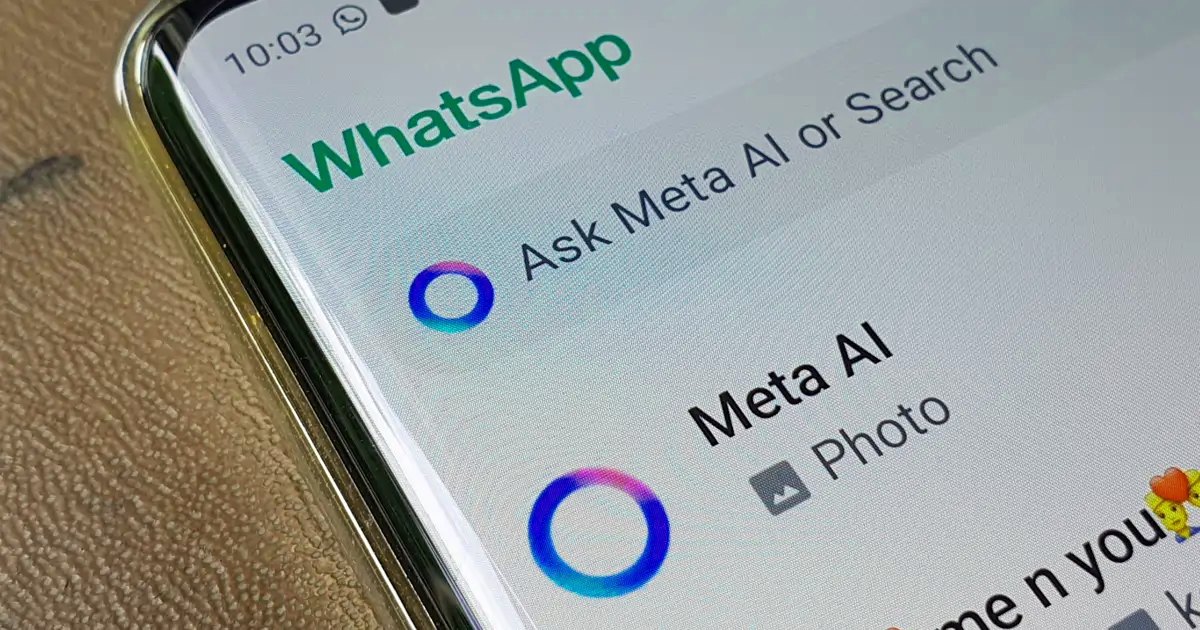
The European Union stepped up pressure on Meta this Monday by warning that it is considering interim measures against the company if it does not allow access for competing AI services to WhatsApp.
Interim measures in competition
“Interim measures” (also called precautionary or interim relief) are temporary orders that a regulator can impose while it investigates, when it believes that waiting until the end of the case could leave harm that is difficult to reverse. In competition, they are often triggered if a platform change can “tip” the market quickly (for example, by closing a distribution channel) before there is a final decision.
According to the information gathered by the Commission, the change in terms was applied in the WhatsApp Business environment and took effect in mid-January 2026, by limiting the use of third-party AI chatbots. The EU executive argues that the change implemented by Meta last month restricts third-party access and prioritizes its own assistant, Meta AI, in a key distribution channel for conversational AI.
The European Commission framed the case within its objective of preventing platforms with market power from “illegally exploiting their dominant position to grant themselves an undue advantage”, especially in digital markets where network effects and scale can shut out smaller rivals.
European Commission investigation into Meta
The Commission opened an investigation in late 2025 for a possible infringement of competition rules. In its preliminary findings, the regulator points out that Meta likely abused its dominant position by preventing access by other AI providers to WhatsApp and by favoring its own system.
Timeline of the WhatsApp-EU case
Milestones that recur in coverage of the case (to place “what happened when”):
– Oct 2025: Meta announces a policy/terms change for WhatsApp Business that limits third-party AI chatbots (coverage: RJ Coders, 2026).
– Dec 2025: The European Commission opens an antitrust investigation into the new access policy for AI providers to WhatsApp (institutional source: European Commission — Digital Strategy, 2025; coverage: MarketScreener, 2025).
– Jan 15, 2026 (approx.): The change in WhatsApp Business that restricts the use of third-party assistants takes effect (coverage: RJ Coders, 2026; matches “mid-January 2026” cited by the Commission in the note).
– Feb 9, 2026: Brussels warns that it could impose “interim measures” to prevent “serious and irreparable” harm if the block persists (not
a base: Expansion, 2026; coverage: El País, 2026).
The focus is not only the presence of Meta AI, but the control of the “entry point”: WhatsApp as mass communication infrastructure in Europe. For Brussels, limiting which assistants can operate within the platform can alter the market for AI applied to messaging, customer service, and automation.
Blocking access to AI services on WhatsApp
According to the available information, Meta blocked access for third-party AIs on WhatsApp, arguing that it was prioritizing its own solution, leaving Meta AI as the default integrated assistant within the platform. The change particularly affects business uses and automated support, where third-party chatbots have become a common tool for handling inquiries, sales, and support.
Operational impact of the block on WhatsApp
What “blocking access” usually means in WhatsApp Business, in operational terms (what changes for a company):
1) Integration: a third-party bot/assistant can no longer connect as before (via API/provider) or its use is limited within the WhatsApp Business flow.
2) Channel experience: the third-party assistant can no longer respond/automate conversations in an integrated way; the channel is pushed toward the in-house assistant (Meta AI) or toward permitted automations.
3) Checkpoints to detect the impact: drop in automation (more chats to agents), broken handoff (bot→human transfer), and loss of traceability (history/context) if the AI has to be “moved” to another channel.
4) Practical restriction: even if the user can use other AIs outside WhatsApp, the critical point here is operating “within” the channel where the conversation with the customer takes place.
The Commission considers that the block may have an immediate effect: if competitors lose access to a channel with a large user base, they could be pushed out of the market before the procedure concludes—hence the reference to possible “serious and irreparable” harm.
Meta’s dominant position and its implications
The case rests on a central premise: WhatsApp is a strategic asset due to its scale and its role as a communications network. In markets with strong network effects, control of a dominant platform can translate into power to pick winners and losers in adjacent services, such as AI assistants.
Control of conversational access
How a dominant platform can “tilt” an adjacent market (conversational AI) without changing prices:
– Network effects: the more users and businesses are on WhatsApp, the more costly it is for un AI provider “not being” there.
– Distribution channel: if WhatsApp is the entry point to conversations (support/sales), controlling which AI operates within the channel is equivalent to controlling access to demand.
– Market foreclosure: by preventing or degrading third parties, the incumbent can accelerate adoption of its own assistant and make it harder for rivals to reach scale, data, and learning.
A typical red flag for regulators: when the technical justification exists, but the rule’s design ends up being discriminatory or more restrictive than necessary.
For the Commission, the risk is twofold:
- Market foreclosure: AI providers that depend on WhatsApp to reach users and businesses could be shut out.
- Less innovation and choice: if only one assistant can operate in an integrated way, the diversity of solutions, models, and approaches is reduced.
Interim measures the EU could adopt
Brussels has not yet detailed what measures it would impose, but it did make the objective clear: to prevent the policy change from cementing an advantage for Meta AI while the investigation continues.
In practice, interim measures usually seek immediate effects, such as:
- Restoring access for third-party AI providers to WhatsApp under non-discriminatory conditions.
- Temporarily suspending enforcement of the policy that prevents the integration of rival assistants.
- Imposing operational obligations to ensure the platform does not favor its own service over alternatives.
| Interim measure (example) | What it is (in simple terms) | Immediate objective | Typical operational impact on WhatsApp Business |
|---|---|---|---|
| Restore non-discriminatory access | Allow third-party assistants to operate again under clear rules | Reopen the channel to competitors while the case continues | Re-enable existing integrations/bots and avoid forced migrations |
| Temporary suspension of the policy | “Pause” the rule that blocks third parties | Freeze the change so it doesn’t cement an advantage | Stop the degradation of support/sales flows already deployed |
| Neutrality obligations (no self-preferencing) | Rules so the product doesn’t push its own assistant by default | Prevent the design from favoring Meta AI | Changes to defaults, access surfaces, and terms of use |
| Minimum technical requirements (quality/security) applicable to all | Equal security/capability standards for Meta and third parties | Address technical risks without foreclosing the market | Certification/controlls for bots, with public and verifiable criteria |
The Commission stresses that these tools are reserved for situations in which the market may suffer damage that is difficult to reverse.
Meta’s reactions to the investigation
Meta has previously defended changes of this kind by citing technical and user-experience reasons, such as the need to control quality, security, and infrastructure capacity. In this case, the company faces scrutiny that focuses on whether those justifications are proportionate or whether, in practice, the result is to exclude competitors and reinforce its ecosystem.
Regulatory benefits and risks
Two readings that the regulator usually puts to the test (and why the “how” matters):
– In Meta’s favor (possible benefits): less spam/phishing, a more consistent experience, and load/infrastructure control when there are spikes in automation.
– Competitive risks (possible costs): shutting the channel to innovators, less choice for businesses/users, and a distribution advantage for Meta AI that is hard to offset outside WhatsApp.
Typical balance point: allowing third parties with clear technical and security requirements that are enforceable and applicable to everyone, rather than a broad veto that ends up functioning as exclusivity.
The investigation remains open, and the outcome will depend on whether the Commission confirms that the conduct constitutes an abuse of a dominant position and what remedies it deems necessary to restore competition.
Final reflections on competition in the digital space
The need for a competitive environment
The tussle between Brussels and Meta illustrates a central debate in the digital economy: to what extent a large-scale platform can unilaterally redefine the rules for access to its ecosystem without distorting the market. For the EU, competition is not limited to price; it includes access, interoperability, and a real possibility of choice.
Implications for the future of AI in communications
Messaging has become a highway for AI: assistants that handle customers, automate processes, and personalize services.
What changes for support and sales operations that depend on WhatsApp
When a platform restricts the entry of third-party assistants, the impact is usually felt on three operational fronts: continuity of integrations (CRM/ERP/billing), omnichannel traceability (history and context compartido) and ability to scale automation with human control (handoff and supervision). That’s why the debate over access and interoperability is not only regulatory: it also shapes how companies design support, billing, and sales within messaging channels. If access to those highways is restricted, the future of conversational AI could end up concentrated in a few hands. The WhatsApp case will be a signal of how Europe intends to balance innovation and platform power in the next phase of artificial intelligence.
The importance of an optimized customer experience in telecommunications
Current challenges in telecommunications customer service
Telcos operate with high volumes of inquiries, technical incidents, and commercial transactions. Friction appears when channels are not coordinated, response times lengthen, and customer information is fragmented across systems.
The Suricata Cx solution: an end-to-end platform
Suricata Cx is positioned as a platform to unify customer service and sales operations, integrating automation, analytics, and interaction management to reduce times and improve consistency in service.
Benefits of automation in customer support
Automation makes it possible to absorb demand spikes, resolve repetitive requests, and route complex cases to specialized agents, with end-to-end traceability.
The role of humans in artificial intelligence
In critical environments, AI works best as support: it suggests responses, classifies contact reasons, and prioritizes cases, while the human agent retains control over sensitive decisions and exceptions.
Sales strategies and lead qualification
Automated qualification helps identify intent, segment opportunities, and route prospects to the right team, increasing conversion without overwhelming agents.
Payment recovery and collections management
Automated flows for reminders, arrangements, and follow-up can improve recovery, as long as consistency across channels is maintained and operational errors are reduced, and integrations with billing and customer service systems preserve the context of the conversation.
Omnichannel operations: the key to cohesion
Effective omnichannel is not about adding channels, withor share context: so the customer doesn’t repeat information and the company maintains continuity across WhatsApp, voice, email, and web.
Functional capabilities that make the difference
Among the most valued capabilities are usually: integration with CRM/BSS/OSS, dashboards, flow orchestration, a knowledge base, and quality measurement.
Why choose Suricata Cx: a research-based approach
A research-based approach prioritizes operational metrics (resolution, times, satisfaction) and controlled tests to validate impact before scaling.
Key metrics for telco automation
How this approach is usually “grounded” in a telco operation (metrics and observable signals before scaling automation):
– FCR (first-contact resolution): if it goes up, it usually indicates the bot/flow is resolving without recontacts.
– AHT (average handling time) and response time: if they go down without CSAT dropping, it usually indicates better routing and self-service.
– CSAT/NPS (satisfaction): useful to detect when automation “resolves” but frustrates.
– Bot→human handoff rate and 24–72h recontact: checkpoints to see whether the AI is handing off in time or “getting cases stuck.”
Typical controlled test: pilot by segment (e.g., billing vs. technical support), with a control group and weekly review of failed conversations to adjust intents, the knowledge base, and escalation rules.
Ideal customer profile for Suricata Cx
Operators with high contact volume, multiple active channels, and a need to standardize processes tend to capture greater value by centralizing operations and automation.
Strategic value of implementing Suricata Cx
Beyond efficiency, an end-to-end platform can become a lever for retention and growth: better experience, lower churn, and greater cross-sell capacity with consistent service.
The EU threatens Meta over AI access in WhatsApp and puts the spotlight on a critical point: who controls interoperability in the channels where conversational AI is being played out today. From Suricata Cx’s experience in omnichannel operations for telecoms and ISPs, this debate reinforces the importance of designing automation and service with openness, traceability, and human control, without depending on unilateral decisions by a single party.
This text is based on the base note and the coverage cited in the dossier, and incorporates operational context to understand the impact on WhatsApp Business. The European Commission’s investigation remained open as of 2026-02-09, so some details may change as the procedure advances. When there isn discrepancies between sources, priority is given to the wording attributed to the European Commission.

Martin Weidemann is a specialist in digital transformation, telecommunications, and customer experience, with more than 20 years leading technology projects in fintech, ISPs, and digital services across Latin America and the U.S. He has been a founder and advisor to startups, works actively with internet operators and technology companies, and writes from practical experience, not theory. At Suricata he shares clear analysis, real cases, and field learnings on how to scale operations, improve support, and make better technology decisions.