


Table of Contents
- 1. Huawei pushes AI to improve telco services
- 2. Priorities for telecommunications operators
- 3. Transformation of consumer services through AI
- 4. Operational efficiency and its importance
- 5. Monetization of artificial intelligence in telecommunications
- 6. Use cases for AI agents in networks
- 7. The Future of the Customer Experience in Telecommunications
Huawei pushes AI to improve telco services
- Huawei foresees a leap in scale: AI capacity 10 times greater, up to 900 billion agents, and a 1,000x increase in data.
- The company places telcos in a privileged position to capture value: network, customer relationship, and large-scale operations.
- The bet involves strengthening the core business (home and consumer), increasing “stickiness” with consistent experiences, and gaining internal efficiency.
- Monetization, according to Huawei, should progress in phases: first efficiency, then services to enterprises, and finally high-frequency consumer scenarios.
AI will transform network design
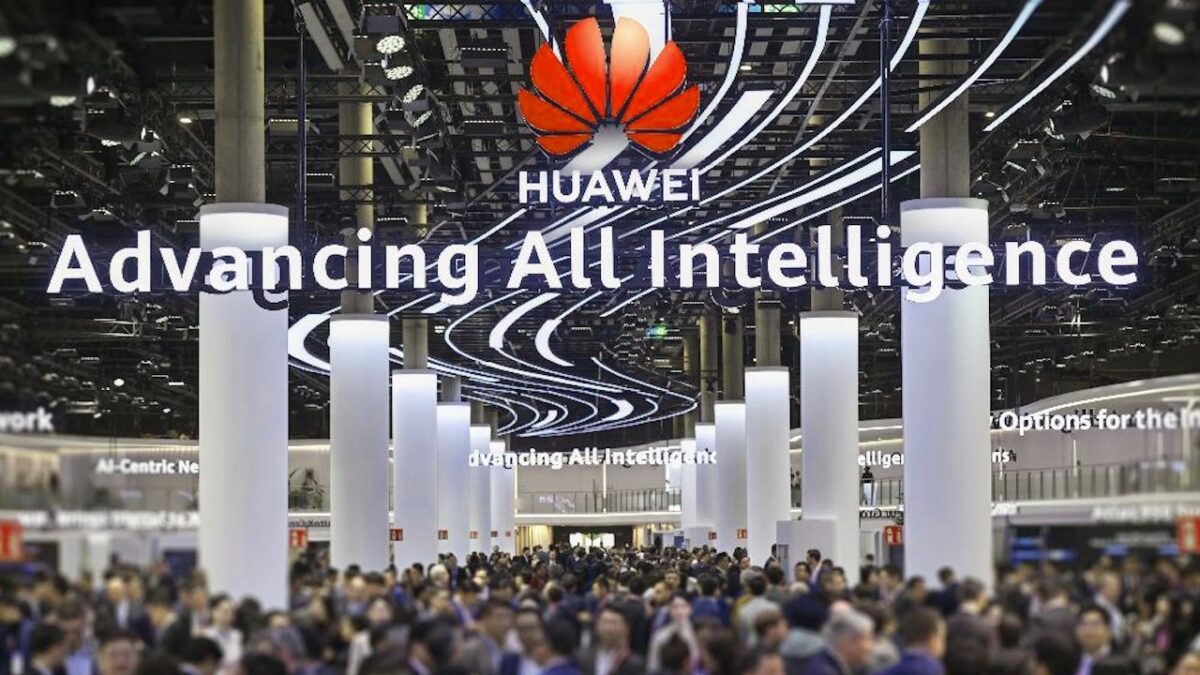
MWC 2026 (Barcelona) was the stage where Eric Yang (Huawei, carrier business) put forward a clear thesis: AI will not only add new functions, but will change the way networks are designed, operated, and “experienced.”
In this article, the figures and examples are presented as predictions and cases cited by Huawei (not as market certainties): they serve to understand what pressures could arrive (more data, more automation) and where a telco can capture value first (home/consumer, consistency across devices, and operational efficiency).
These lines compile the messages presented by Eric Yang, president of Huawei’s carrier business, during his appearance at Mobile World Congress 2026 (Barcelona).
Huawei sketches a scenario of accelerated expansion of artificial intelligence that, if it materializes, will put pressure on and at the same time benefit operators. At Mobile World Congress 2026 in Barcelona, Eric Yang, president of Huawei’s carrier business, stated that AI will be “increasingly reliable” and that its capacity will grow by a factor of 10.
The prediction is accompanied by two figures that point to a structural change: the emergence of up to 900 billion AI agents and a 1,000x increase in data. In telecommunications terms, this implies more traffic, greater demands for latency and quality, and a growing need for automation to operate networks and services efficiently.
| Signal (according to Huawei / Eric Yang at MWC 2026) | Cited magnitude | What it means for a telco (practical impact) | Operational question to make it concrete |
|---|---|---|---|
| Growth in AI capacity | 10x | More “in-production” use cases (not just pilots) and more automated decisions in the network/service. | Which processes today are manual due to lack of reliability and could move to supervised automation? |
| Number of AI agents | Up to 900 billion | Multiplication of machine-to-machine interactions and assistants acting on behalf of users/companies. | Does your identity, permissions, and audit architecture support agents acting “for” the customer? |
| Data growth | 1,000x | More pressure on transport, storage, observability, and data governance; more value if it is used to prevent incidents. | Which part of the data is truly actionable (telemetry, tickets, QoE) and with what latency do you need to see it? |
Priorities for telecommunications operators
Huawei’s message to telcos can be summed up in three operational and commercial priorities:
- Upgrade consumer and home services with AI to strengthen the core business (fixed and mobile connectivity, and associated services).
- Offer consistent experiences across devices —from mobile to router, from home to car— to increase loyalty and reduce churn.
- Optimize internal operations before “exporting” AI capabilities to other industries, first validating the impact on costs, quality, and resolution times.
Priorities turned into action
How to turn the 3 priorities into an actionable plan (without changing the thesis):
– 1) AI home/consumer (strengthen the core)
– Focus: support and self-management of Wi‑Fi/home, diagnosis and resolution.
– Goal: fewer repeat incidents and better perceived quality.
– Suggested KPI: first-contact resolution rate (FCR) and reduction in ticket “reopens”.
– 2) Consistent experience across devices (increase “stickiness”)
– Focus: experience continuity (mobile-router-TV/car) and coherent policies (prioritization, profiles, controls).
– Goal: the customer feels a “single” service even if they change screens or networks.
– Suggested KPI: churn and adoption of bundles/premium (as a proxy for perceived value).
– 3) Internal efficiency first (fund and validate)
– Focus: O&M, quality inspection, automation of repetitive tasks.
– Goal: lower cost per incident and shorten cycle times.
– Suggested KPI: cost per ticket/order and MTTR (mean time to resolution).
The underlying thesis is that operators don’t just transport data: they can orchestrate experiences and automate processes at the edge of the network, where AI can act with context and speed.
Huawei positions the consumer front as the most immediate ground for differentiation, especially in the home and in traditional services such as voice, which can be “reinvented” with agents.
In this context, “AI agents” are understood as assistants capable of interacting (for example, by voice), executing operational actions (such as network tests or traffic prioritization) and, when they cannot resolve, escalating the case by opening a ticket and coordinating a visit.
Operable Home/Voice Diagnostic Flow
Practical agent flow (home/voice) with checkpoints to avoid “magic” and make it operable:
1) Detect
– Signal: user complaint (“it’s slow”), QoE degradation, or anomaly in telemetry.
– Checkpoint: confirm context (device, location, time, type of use: gaming/streaming/call).
2) Prioritize
– Action: apply temporary policies (e.g., prioritize latency-sensitive traffic).
– Checkpoint: log the change and its duration; allow it to be automatically reverted.
3) Test
– Action: run tests (connectivity, Wi‑Fi, latency, loss, call noise).
– Checkpoint: distinguish “network problem” vs “device/environment problem” to avoid false escalation.
4) Resolve
– Action: apply safe fixes (guided reboot, channel change, profile adjustment, noise suppression, etc.).
– Checkpoint: validate with a simple metric (improved latency/stability or perceived quality) and ask for user confirmation.
5) Escalate (if not resolved)
– Action: open a ticket with the diagnosis attached, propose a visit window, and coordinate scheduling.
– Checkpoint: ensure the ticket includes “what was tested” and “what changed” to avoid repetition and speed up field work.
Improving the home experience
The home emerges as a central opportunity: the customer doesn’t want technical menus or endless calls, but rather for it to “work.” According to Yang, a home AI agent could manage network performance with voice commands and act when quality degrades.
The example described: if the home network gets worse, the agent can prioritize latency-sensitive applications (such as gaming), automatically test the network, resolve the problem if possible or, if not, open a ticket, schedule a visit, and guide the maintenance process.
Huawei cited China Telecom as an ongoing case: an upgrade of VIP services with fiber-to-room packages combined with AI agents for the home, a formula that blends infrastructure improvement with an experience layer and automated support.
Reinvention ofVoice services
Voice, historically a mature service under competitive pressure, is presented as a natural candidate for AI. Yang highlighted that AI-powered call agents can significantly reduce background noise and enable value-added services: reservations, translation, food ordering, or handling requests during the call.
In this vision, voice stops being just minutes and coverage: it becomes an interface for executing tasks, with the potential to expand the service’s reach and improve the user experience.
Operational efficiency and its importance
Before promising new revenue streams, Huawei insists on AI’s “first dividend”: efficiency. Yang gave a concrete example in installation and maintenance: where manual inspections reached around 2% of users, AI-based systems could review 100%.
Real impact of efficiency
Quick checklist to measure whether the “2% → 100%” efficiency translates into real impact (and not just coverage):
– Clear baseline: what were the inspection rate, cost per inspection, and % of faults detected before?
– Coverage vs. accuracy: if coverage increases, what happens to false positives/negatives and rework?
– Cycle time: does the time from installation/intervention to quality validation go down?
– Total cost: does the cost per order decrease (including revisits) or is it just shifted to another area?
– Perceived quality: is it reflected in fewer post-installation incidents and better NPS/CSAT?
– Traceability: is there an auditable record of what was inspected, what was detected, and what action was taken?
The implication is twofold: improved quality (fewer undetected faults) and reduced costs (fewer manual reviews, less rework). In a sector with pressured margins, O&M (operations and maintenance) automation is positioned as a prerequisite for scaling any AI strategy.
Monetization of artificial intelligence in telecommunications
Huawei proposes phased monetization, aligned with technological maturity and commercial risk:
- Phase 1: highly mature use cases such as energy savings and O&M efficiency, where returns are usually more measurable and faster.
- Phase 2: “productize” internal tools (office, sales, customer service) and turn them into offerings for enterprises, leveraging what has been learned within the operator.
- Phase 3: high-frequency, high-fidelity consumer scenarios, where agents are used daily and scale quickly, strengthening the link with theclient.
| Phase (according to Huawei) | Typical investment | Main risk | Value horizon | Type of value that tends to dominate | Signal that you’re ready to move on to the next |
|---|---|---|---|---|---|
| 1) Efficiency (energy, O&M) | Medium (integration + data + automation) | Incomplete measurement: “theoretical” savings that don’t make it to P&L | Short | Cost reduction, less rework, better quality | Repeatable savings and stable metrics (cost per order/ticket, MTTR) |
| 2) B2B (turn internal tools into an offering) | Medium–high (product, support, go-to-market) | Product fit: what’s internal isn’t always sellable as-is | Medium | New revenue from services/solutions and differentiation | Standardized internal use cases + support capability and SLAs |
| 3) High-frequency consumer use ( “daily” agents) | High (experience, ecosystem, scaling) | User trust and omnichannel operations complexity | Medium–long | Retention, ARPU via bundles/premium, churn reduction | Consistent, low-friction experience; automation with clear human scaling |
The order is not accidental: first the transformation is funded with efficiencies, then the B2B catalog is expanded, and finally massive scale in consumer is pursued.
Use cases for AI agents in networks
Beyond the rhetoric, the use cases described point to a more autonomous, intent-oriented network:
- Automatic diagnosis and resolution in the home: testing, traffic prioritization, opening incidents, and coordinating visits.
- AI-assisted quality inspection in deployments and interventions, increasing control coverage from 2% to 100% according to the cited example.
- Enhanced voice agents: noise reduction and task execution (translation, bookings, orders), integrating services on top of the connectivity layer.
Cases and expected results
Mini catalog (what it is, what it needs, and what result to expect) based on the cited examples:
– Home: self-diagnosis + prioritization
– Example: prioritize gaming when quality drops, run tests, and decide whether it’s resolved or a visit is scheduled.
– Prerequisites: CPE/Wi‑Fi telemetry, QoS policies, integration with CRM/ticketing and field scheduling.
– Expected result: fewer repeat calls
and fewer technician “walkabouts” without a diagnosis.
– O&M: automated quality inspection
– Example: moving from partial manual inspection (~2%) to broad review (up to 100% in Yang’s example).
– Prerequisites: codified quality criteria, installation/maintenance data, sampling and auditing capability.
– Expected result: early fault detection and reduced post-intervention rework.
– Voice: call agent with noise suppression + tasks
– Example: reduce background noise and enable actions (bookings, translation, orders) during the call.
– Prerequisites: real-time audio pipeline, integration with services/partners, permission controls and action logging.
– Expected result: better perceived quality and expansion of the voice service’s “reach.”
The cross-cutting idea is that agents don’t just “respond”: they act, coordinate, and close operational loops, from the user experience to the back end.
The Future of the Customer Experience in Telecommunications
Digital Transformation and Its Impact on the Sector
Huawei’s roadmap suggests that digital transformation in telecommunications is entering a phase where AI stops being an add-on and becomes a structural layer: in the network, in operations, and in the relationship with the customer. With more data and more agents, the differentiator will shift toward who automates better and who turns that automation into experience.
The Importance of Automation in Customer Service
AI agents promise to reduce friction: fewer steps, less waiting, and more first-contact resolution. In the approach presented, customer service is integrated with operations: if there’s a problem, the agent doesn’t just inform, but tests, prioritizes, fixes, or escalates with a ticket and schedule.
Challenges and Opportunities in AI Implementation
it implies opportunities, but also complexity: integrating agents with network systems, field processes, and service channels. The opportunity for telcos is to turn that complexity into a competitive advantage based on their infrastructure and operational capillarity.
Strategies to Improve Customer Retention
Huawei links retention to two levers: improving the core service (home and connectivity) and ensuring consistency across devices. If the customer perceives that the network “self-manages” and that the experience is uniform, the likelihood of staying and subscribing to premium services increases.
In Yang’s view, AI agents are the engine of modernization: they turn connectivity into a platform for actions—from optimizing an online gaming session to managing a voice reservation—and enable operators to move from selling access to selling outcomes. In a mature market, that transition can make the difference between competing on price or competing on experience.
Key indicators at 12 months
What to watch over the next 6–12 months to know whether this vision is becoming “real” at a telco:
– Operational signals: an increase in closed-loop automations (detect→act→verify) without human intervention in repeatable cases.
– Customer signals: sustained improvement in FCR and fewer reopenings; less friction at home (Wi‑Fi) and in voice.
– Network/data signals: more usable telemetry in near real time and better traceability of the agent’s decisions.
– Business signals: pilots that move to deployments with KPIs published internally (cost per ticket/order, MTTR, churn, bundle adoption).
AI growth at Huawei: Opportunities for Telcos focuses on how agents, automation, and consistency across devices can turn operational complexity into a better experience and higher retention. At Suricata Cx, we work precisely on bringing that vision down to earth in real omnichannel operations for telcos and ISPs, with AI applied to resolution and efficiency without losing human control where it matters.
In practice, that “bringing down to earth” usually depends on two pieces: integrating the agents with systems and processes (tickets, field scheduling, customer/service data) and designing flows where automation resolves what’s predictable and escalates transparently when human intervention is required.
The figures and examples attributed to Huawei are based on public statements made at MWC 2026 and reflect the manufacturer’s own vision and predictions. In practice, the pace of adoption and results may vary depending on systems integration, data quality, and each operator’s operations. This information corresponds to what was publicly available at the time of writing and may be updated if new data emerges.